
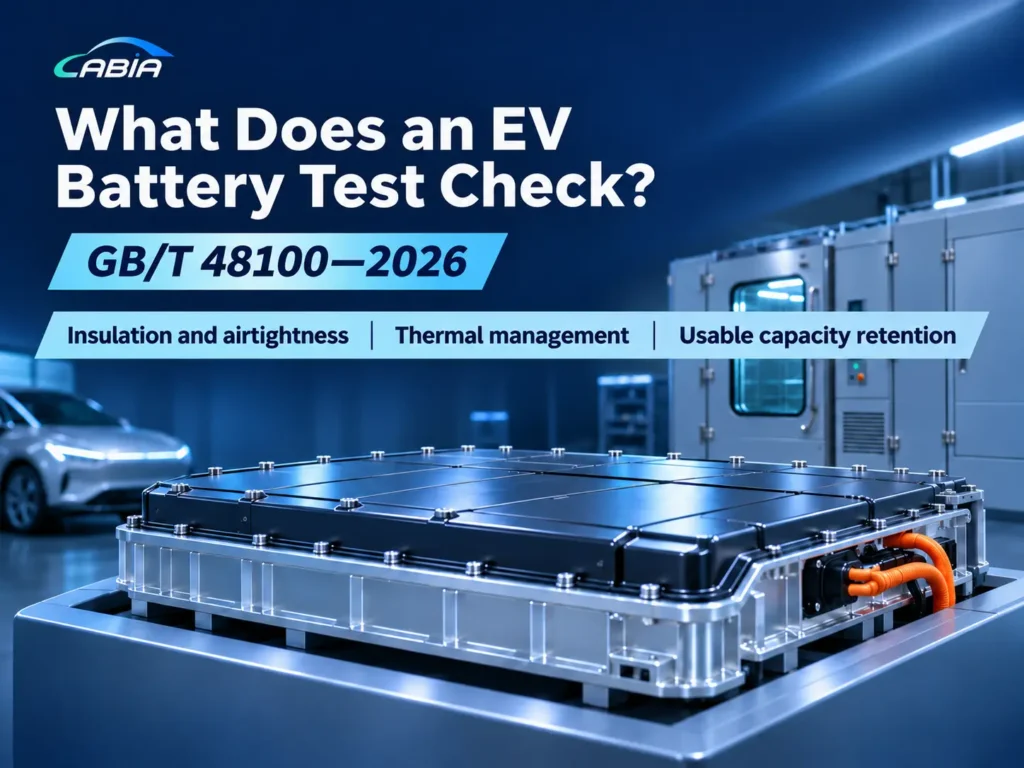
GB/T 48100—2026 sets out testing methods for traction batteries already in use in electric vehicles. It covers battery-system condition, electrical safety, and performance-related measurements, providing a common reference for inspections during a vehicle’s service life.
Battery Safety and System Inspection
The standard specifies procedures for visual inspection, airtightness testing, insulation assessment, and thermal management system checks.
These inspections focus on the physical condition of the battery system and the operation of components relevant to battery safety. Airtightness and insulation testing are particularly important for identifying potential problems that may not be apparent during routine vehicle operation, while thermal management checks help assess the systems responsible for controlling battery temperature.
Battery Capacity and Consistency Assessment
Beyond safety-related inspections, the standard provides methods for estimating available capacity retention, an important measure of battery condition after extended use.
It also covers the assessment of voltage and internal resistance consistency. Variations in these parameters can indicate differences in the condition of cells or modules within a battery system, providing additional information for evaluating battery performance.
Together, these measurements offer a more structured basis for assessing batteries that have undergone different operating conditions and usage patterns.
Applications in Vehicle Inspection and the Used-EV Market
The testing methods are intended for several practical applications, including battery safety inspections, functional testing, and used-electric-vehicle transactions.
Battery condition is an important consideration in used-EV evaluations, where differences in age, mileage, charging history, and operating conditions can affect battery performance. Standardized testing methods can help inspection organizations and automotive service providers assess battery condition using more consistent procedures.
The standard does not establish a universal battery-health certification or determine the remaining useful life of a battery. Instead, it provides technical methods for carrying out assessments and interpreting relevant battery-condition measurements.