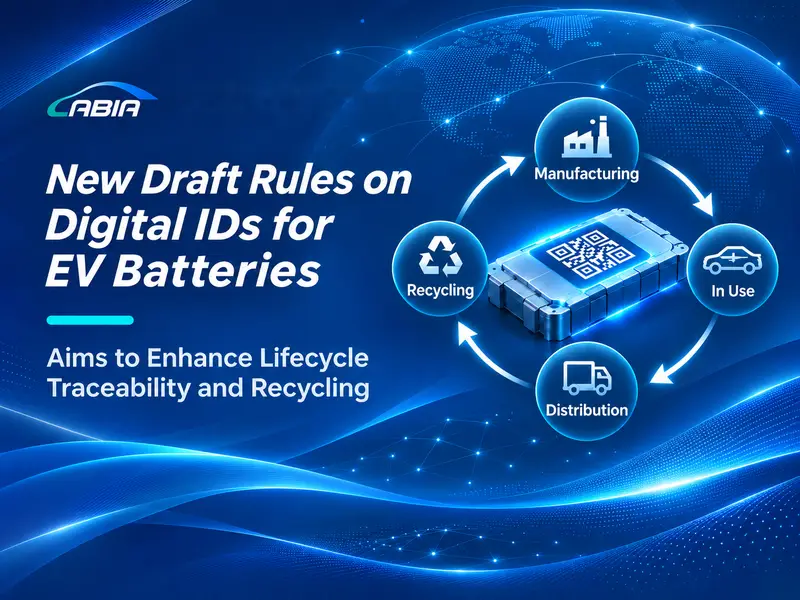
China’s Ministry of Industry and Information Technology (MIIT) has released draft rules on digital identities for new energy vehicle (NEV) traction batteries, seeking to improve battery traceability and strengthen oversight of recycling and resource recovery.
The proposed Interim Provisions on the Management of Digital Identities for NEV Traction Batteries were published for public consultation on November 5, 2026. Feedback is due by December 6, 2026. The proposal addresses a practical challenge for the battery industry: maintaining consistent identification and information as batteries move between manufacturers, vehicle producers, service providers and recycling companies.
Connecting Information Across the Battery Lifecycle
The draft also forms part of China’s broader efforts to improve the recycling and comprehensive utilization of retired NEV traction batteries.
As the number of electric vehicles in use grows, the industry must prepare for more batteries retiring. Effective collection and recycling depend partly on the ability to identify batteries and maintain relevant records as responsibility passes from one organization to another.
Digital identities could help preserve this information link. They may support coordination of collection, evaluation, and recycling activities while improving traceability for organizations responsible for handling retired batteries.
Information management is one part of that process. Its practical value will depend on how consistently records are maintained and how effectively the organizations involved can access and exchange the information they need.
Supporting Recycling and Resource Recovery: Relevance to International Industry Cooperation
For international companies working with China’s battery industry, the consultation offers an opportunity to follow the development of the country’s approach to battery traceability.
Battery manufacturers, automakers, technology providers and recyclers may have an interest in how the proposed system could interact with their existing information-management practices. Battery identification, data compatibility and information exchange across supply chains are potential areas for further technical discussion.
These questions are also relevant to cooperation between Chinese and international stakeholders, particularly where battery production, vehicle manufacturing and recycling involve partners in different markets.
However, the proposal remains a consultation draft. Its publication should not be interpreted as confirmation of final obligations for overseas companies. The scope of the requirements and their implications will need to be assessed against the provisions ultimately adopted.
Next Steps
MIIT opened the consultation on November 5, 2026, with comments due by December 6, 2026.
The initiative reflects the increasing importance of information management alongside safety, manufacturing quality and recycling as the battery industry develops.
For international industry participants, understanding these regulatory developments can support more informed discussions about future supply-chain cooperation.
Source: Ministry of Industry and Information Technology (MIIT), November 5, 2026 (in Chinese)