Quantification methods and requirements for traction-battery product carbon footprints

Policy and standards , industry news,  events and delegations — published in English, with a source included with every figure.

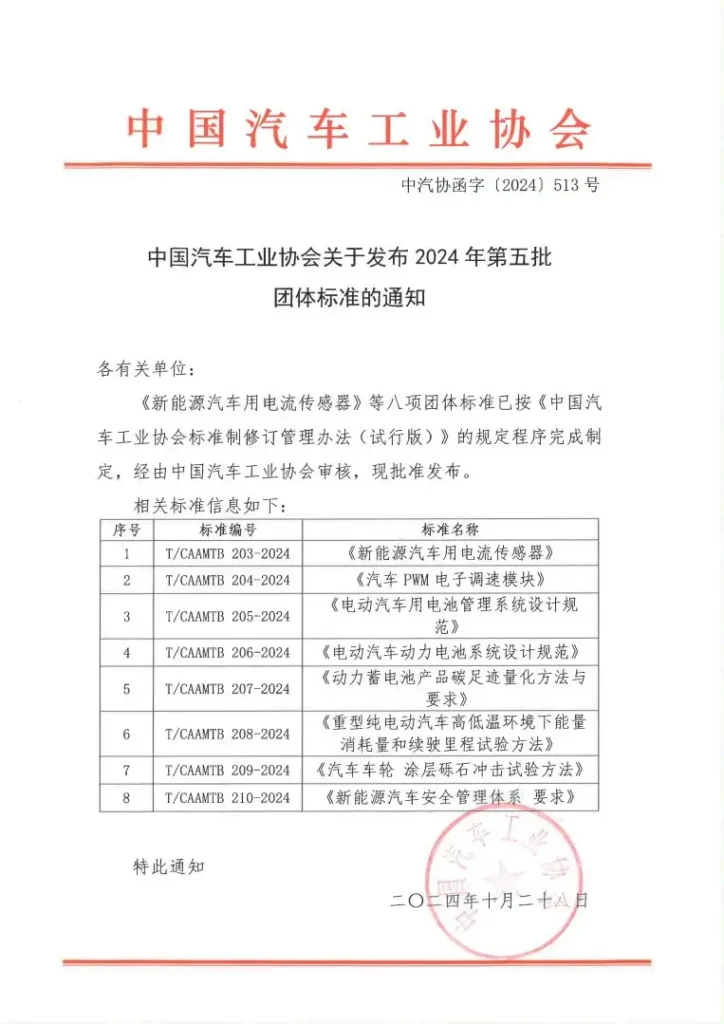
T/CAAMTB 207—2024 sets out carbon-footprint calculation requirements, principles, scope, methods and reporting for upstream raw materials, battery materials, cells, modules and systems. The registered scope primarily concerns lithium-ion traction batteries for new-energy passenger vehicles, commercial vehicles and motorcycles, with other battery types able to refer to it. Batteries reprocessed for second-life use are excluded. CABIA is listed among the drafting organizations. The standard is suitable for a carbon-management resource library, while its status as an association standard should remain distinct from national standards, industry standards and overseas regulatory requirements.

Share:
Table of Contents
Insights Tag
Insights Category
CABIA

Connecting global cooperation needs
with Chinese power battery industry
resources, serving international
exchanges, cooperation docking, and
project promotion.

Start a confidential consultation

Write to us, or fill in the form below.  Your message will be sent to a member of our team, not a shared inbox.

About Us

China Battery Automotive Innovation Alliance(Cabia)——International Cooperation Committee(ICC) is the international-cooperation body of NGO. The Alliance was founded in 2016 and operates under the guidance of the Equipment Industry Division I of China’s Ministry of Industry and Information Technology. 

Get Inquiry